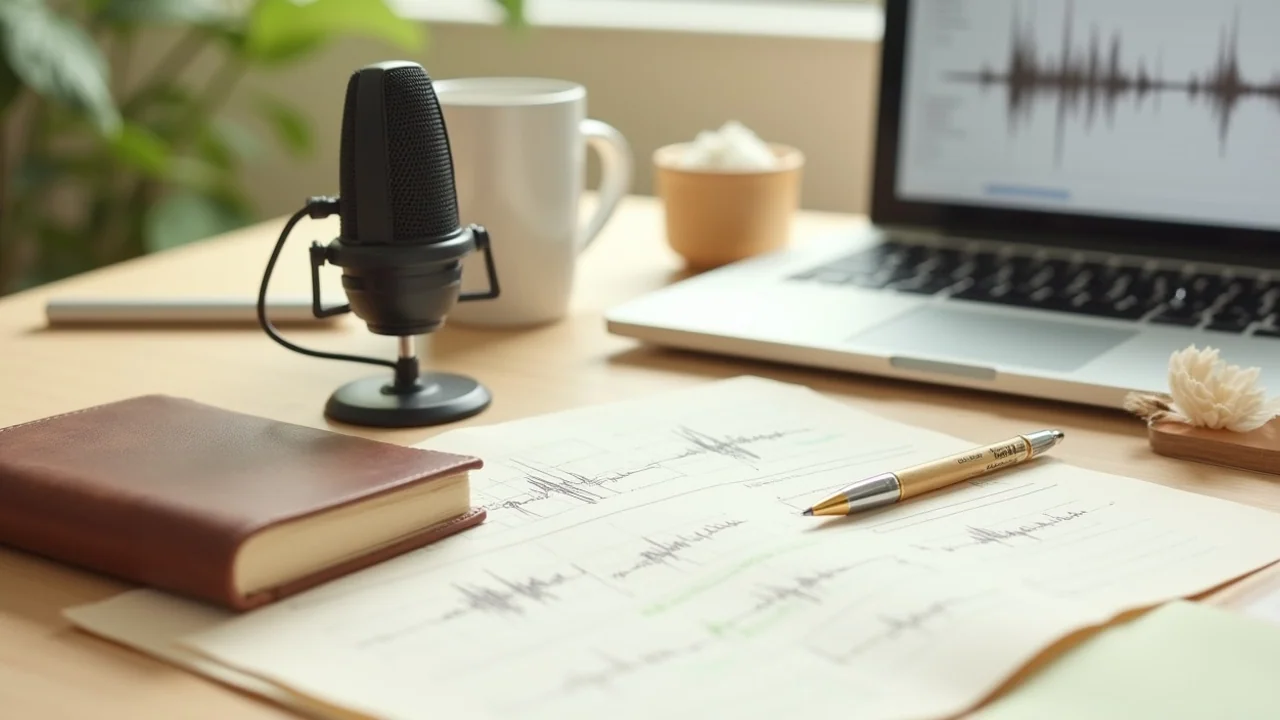
ElevenLabs is the AI voice cloning platform I’ve used for 8 months to generate voiceovers for 500k.io content, and the workflow has settled into 3 specific use cases that justify the $22/month cost — primarily video voiceover, newsletter audio versions, and tutorial narration. The cloned voice sounds like me about 85-90% of the time on short content (under 60 seconds). On long-form, the cracks show. The technology is real and useful, but only within the right boundaries.
This article is the actual workflow I run, not a vendor pitch. The 3 use cases where it works, the use cases where I don’t trust it, and the 5-minute setup that takes you from “I want to clone my voice” to “I have a working ElevenLabs voice.”
If you’ve read AI video generation stack 2026, this is the audio companion. The video stack + ElevenLabs voice = a complete short-form content production workflow.
What ElevenLabs actually does
ElevenLabs is an AI audio platform that does three things solopreneurs care about:
- Voice cloning — Train an AI voice model on a few seconds to a few hours of your real voice
- Text-to-speech — Generate audio from text using either your cloned voice or one of their library voices
- Voice changing — Real-time voice transformation (less relevant for most founders)
The pricing tiers as of May 2026:
| Plan | Cost/mo | Characters / mo | Voice clones |
|---|---|---|---|
| Free | $0 | 10K (~10 min audio) | 1 Instant Voice Clone |
| Starter | $22 | 30K (~30 min audio) | 10 IVC |
| Creator | $99 | 100K (~100 min audio) | 30 IVC, 1 Professional Voice Clone |
| Pro | $330 | 500K (~500 min audio) | Higher limits, more PVC slots |
For 500k.io, the Starter plan at $22/mo covers everything. I’ve never come close to the 30K character limit. If you’re producing >30 minutes of AI audio per month, upgrade to Creator.
The 5-minute setup
Step 1 — Sign up and start the free trial (1 min)
https://elevenlabs.io → Sign up → Verify email. The free tier is enough to test before paying.
Step 2 — Record your training sample (3 min)
For Instant Voice Clone (IVC), you need 1 minute of clean audio. The “clean” part matters more than the “1 minute” part.
Recording tips:
- Microphone: A decent USB mic (Shure MV7 at ~$250, or Blue Yeti at ~$130). Phone audio works but produces noticeably worse output.
- Environment: Quiet room. No A/C humming. No background traffic. No echo (a closet works well as a makeshift booth).
- Script: Read varied content — declarative sentences, questions, lists, a paragraph of prose. Don’t read a script from your work; the model will pattern-match to that vocabulary.
What I recorded for my clone (90 seconds total):
- 30 seconds of conversational delivery (“Hey, I’m Maxime. I run 500k.io…”)
- 20 seconds of varied sentences (questions, exclamations, casual asides)
- 20 seconds of structured speech (a list of 5 items, a numbered process)
- 20 seconds of a longer prose paragraph
This gives the model a range of cadence, pitch, and tone to learn from.
Step 3 — Upload and train (1 min)
Voice Lab → Add Voice → Instant Voice Clone → Upload the .wav or .mp3 file. Name the voice. Confirm voice ownership (legal requirement). Click create.
Training takes ~30 seconds. The voice is then available in the voice list.
Step 4 — Test with a real sample (5 min)
Open the Speech Studio. Paste a paragraph of text. Select your cloned voice. Generate. Listen.
First impression: the model has captured your voice. The cadence is yours. The general tone is yours. The detail may be off — some phrasing sounds slightly off, breathing rhythm might be unnatural.
If the first test is unusable, re-record the training audio with better mic / quieter environment / more varied content. Most people get a usable voice on the first attempt.
The 3 use cases that justify $22/mo
Use case 1 — Video voiceover
This is the highest-ROI use. I generate voiceover for 2-3 short videos per week. Each video needs 30-90 seconds of voice.
Workflow:
- Write the script in plain text (or Notion)
- Run through ElevenLabs’ Speech Studio with my cloned voice
- Tune the stability and clarity sliders (more on this below)
- Generate, download as .mp3
- Drop into CapCut for the video
Per-video voiceover time: 5-8 minutes. Compare to recording it myself: 15-30 minutes including takes, edits, and cleanup. The 10-25 minute savings × 8-12 videos per month = 1.3-5 hours/month saved. At any reasonable hourly value, this justifies the $22/mo by itself.
Use case 2 — Newsletter audio version
Beehiiv and Substack both support audio versions of newsletter posts. ~30% of newsletter readers prefer audio in some niches (especially commuter/parent demographics).
Workflow:
- Newsletter draft finalized
- Run through ElevenLabs in chunks (5-7 minute chunks per generation — character limit per request)
- Stitch in Audacity (free) or DaVinci Resolve
- Upload to Beehiiv as audio version
Per-newsletter audio time: 15-25 minutes. Recording myself: 60-90 minutes including retakes. Significant time save, and the audio version drives ~10-15% incremental engagement on the newsletter.
Important caveat: this works for ~5-7 minute newsletters. For 15+ minute audio, the AI voice starts feeling monotonous and listeners notice. Recommend either keeping newsletter audio short or using your real voice for long-form.
Use case 3 — Course / tutorial narration
For lead magnets that include audio explanation (e.g., the audio walkthrough of a Notion template), ElevenLabs covers the narration cleanly.
Workflow:
- Script the walkthrough (5-10 minutes of audio)
- Generate in 1-2 chunks
- Drop into the lead magnet as MP3 or embedded player
Per-lead-magnet: 20-30 minutes. Recording: 90-120 minutes including takes. Saves ~1 hour per audio narration.
What I avoid
Three things I don’t use my cloned voice for:
Avoid 1 — Long-form podcast production
For an authentic podcast, listeners notice the AI voice within 8-15 minutes. The subtle “this person is breathing wrong” or “this cadence is too consistent” tells become impossible to ignore. For real podcast production, record yourself.
Avoid 2 — Customer service voice replies
The uncanny valley of “is this Maxime or AI Maxime?” hurts trust in 1-on-1 contexts. Customer replies, sales conversations, anything where the listener thinks they’re hearing a person — record real audio.
Avoid 3 — Anything requiring genuine emotion
The cloned voice handles calm, informative, friendly tones well. It struggles with: anger, deep enthusiasm, sadness, surprise, sarcasm. If your content needs real emotional range, use real recording.
The settings that matter (stability vs clarity)
ElevenLabs’ Speech Studio has two key sliders: Stability and Clarity (or “Similarity” in the new UI).
Stability (0-100): Lower = more variation in delivery. Higher = more consistent.
- 0-30 (low stability): More dynamic, more emotional range, but more random — sometimes weird artifacts
- 30-60 (medium): Balanced — recommended for most content
- 60-90 (high): More monotone but more predictable — useful for long content where variation is distracting
Clarity / Similarity (0-100): How closely to match the original voice.
- 0-50: Voice diverges, sounds less like you
- 50-80: Standard — recommended
- 80-100: Tightest match, but more artifacts
My defaults for 500k.io content:
| Use case | Stability | Clarity |
|---|---|---|
| Short video voiceover | 40 | 75 |
| Newsletter audio | 55 | 70 |
| Tutorial narration | 50 | 75 |
These produce the best output for my voice. Yours will be different. Test 5-10 variations early to find your sweet spot.
The honest quality assessment
For 500k.io’s use cases, the cloned voice is good enough that:
- Most listeners can’t tell it’s AI on short content (under 60s) — confirmed by asking ~15 newsletter subscribers who heard the audio version
- About 20% notice on medium content (1-5 min) — they say “something feels off” but can’t pinpoint it
- About 80% notice on long content (10+ min) — the monotony and rhythm tells become clear
The trade-off is real. Use AI voice where the savings justify the modest quality drop. Don’t use it where listeners need to feel a real human’s presence.
The ethical line (one paragraph)
Clone your own voice freely. Don’t clone anyone else’s voice without explicit consent. ElevenLabs requires voice ownership verification before training; don’t try to bypass this. Don’t clone deceased people, public figures, or competitors. Don’t use AI voice to impersonate someone in any context where a listener would be deceived. The technology is powerful; the rule is consent. If you wouldn’t be comfortable telling someone “this is an AI version of [person]‘s voice,” don’t do it.
What ElevenLabs is NOT
Three things I see founders try with ElevenLabs that don’t work:
Not great at 1 — Real-time conversation
Live AI voice chat (think AI customer service answering calls in your voice) is on the roadmap but not production-quality yet. The latency and naturalness aren’t there.
Not great at 2 — Multilingual content with the same clone
Your English cloned voice doesn’t automatically speak French well. The model can produce French output, but it doesn’t sound like you — it sounds like a generic French voice. For multilingual content, clone separately or use ElevenLabs’ library voices for non-native languages.
Not great at 3 — Singing or musical content
Don’t try to generate songs in your cloned voice. The model is trained on speech patterns, not vocal music. Output is uncanny.
The full audio stack
For the complete audio production for 500k.io:
| Tool | Cost/mo | Job |
|---|---|---|
| ElevenLabs Starter | $22 | Voice cloning + TTS |
| Audacity | $0 | Audio editing (free, open-source) |
| Shure MV7 mic (one-time) | ~$250 | Real recording when needed |
| Suno (optional) | $10 | Music generation |
| Total recurring | $32/mo |
Total stack at $32/mo (excluding one-time mic purchase). Replaces what would have been ~$300-800/month of voiceover services and music licensing for the same output volume.
Where the field is heading
Two trends for the next 12 months:
Trend 1 — Emotion control
ElevenLabs and competitors are racing to add genuine emotional range. By Q4 2026 expect cloned voices to handle anger, enthusiasm, sadness more believably. The “calm AI voice” era will end.
Trend 2 — Real-time interactive voice
Combined with low-latency conversation infrastructure, expect AI customer service in your voice to become production-quality by mid-2027. This will be both useful and ethically loaded.
For now, ElevenLabs in 2026 is mature for the 3 use cases described. Plan around them.
The honest single-paragraph voice cloning verdict
ElevenLabs voice cloning at $22/mo is the right tool for 3 specific solopreneur use cases: short video voiceover, newsletter audio version (under 10 min), and tutorial narration. It saves 10-60 minutes per piece of audio. For long-form podcast, customer service, or anything requiring real emotional range, record real audio. The 5-minute setup with 1 minute of clean training audio produces a voice that’s 85-90% indistinguishable from real on short content. Clone your own voice only; don’t clone others without consent. Pair with Audacity (free) and a $250 mic for the complete stack at $32/mo.
For the wider creative ecosystem, see AI video generation stack 2026, AI image generation for solopreneurs, and marketing automation with AI.
FAQ
How good is ElevenLabs voice cloning compared to a real recording?
For short content (under 60 seconds), ~85-90% of real recording quality. Listeners typically can't tell unless they're specifically listening for it. For long-form (5+ minutes), the cracks show — slight monotony, occasional weird pronunciation, breathing rhythm that's too consistent. The use case matters.
What's the legal/ethical line on voice cloning?
Clone your OWN voice freely. Cloning someone else's voice without explicit consent is at minimum unethical and often illegal (depends on jurisdiction). ElevenLabs requires voice ownership verification for cloning. Don't clone celebrities, deceased people, public figures, or your competitors. The technology is powerful; the line is consent.
How much training data do I need?
Instant Voice Clone: 1 minute of clean audio. Professional Voice Clone: 3 hours of carefully-recorded studio audio. Instant is fine for most solopreneur use cases. Professional only matters if you're producing podcast-quality long-form content with your AI voice.
Will listeners feel deceived?
Yes, if you don't disclose. Best practice: when AI voice is your primary delivery (full podcasts, audiobooks, training content), disclose at the start. When AI voice is a supplement (short outros, quick narrations, accessibility), disclosure is courteous but not strictly necessary. The 'feel' depends on the context.
What's the single most common voice cloning mistake?
Recording the training data in noisy conditions. ElevenLabs trains on what it hears — background noise, microphone artifacts, room reverb all show up in the cloned voice. Record in a quiet room with a decent USB microphone (Shure MV7 or similar, $250 one-time investment) and the output is dramatically better.